
Published in Sun Sentinel on April 28, 2026.
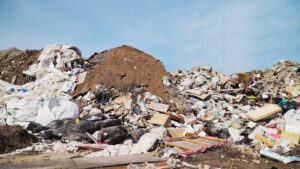
Photo from Shutterstock
Managing trash is an essential service for a functional society. Broward generates 5 million tons of garbage annually, or 20,000 pounds per minute. As our population increases, so will our trash. The regional landfill is reaching capacity; the waste-to-energy facility is already at capacity. With a fractured “every city for itself” model, cities negotiate short-term contracts that lack the maximum bargaining power of economies of scale. Sadly, this fragmentation has caused a crisis of our own making.
But there is hope in a comprehensive plan to move away from this disjointed approach and combine our collective economic strength to manage trash as a region. The governing board of the Solid Waste Authority of Broward County (SWA), made up of representatives from 28 cities and Broward County, unanimously approved a 40-year Master Plan to reclaim our trash management destiny and put us back on track to reduce, reuse and recycle. However, if SWA-participating cities and Broward County do not vote to approve this plan and move forward together, we will return to the fragmented approach that is a proven failure.
Mike Ryan is a candidate for Sunrise mayor. (courtesy, Mike Ryan)
Mike Ryan is mayor of Sunrise.
To understand the significance of this moment, we must look back. In 1975, Palm Beach and Broward counties faced the same challenges regarding millions of tons of garbage. Palm Beach County went one direction. Broward County went another.
Florida established a goal of a 75% recycling rate by 2020. Palm Beach County, through a sustained countywide approach, reported a 90% recycling rate in 2024. It invests $4 million annually in education because when residents recycle “wrong,” cities pay hefty contamination penalty charges and it strains the limited disposal capacity.
In 2013, Broward had a 60% recycling rate and was on pace to meet the goal. But Broward’s then-existing countywide cooperation agreement collapsed. Each city began negotiating contracts on its own. Competition dwindled and many cities halted recycling altogether. The 2024 recycling rate plummeted to 38%, and if you remove credits for waste-to-energy, that number falls to 29%.
Successful management means only sending trash that cannot be diverted or reused to landfills and waste-to-energy. Food waste is heavy and troublesome for landfills but can be beneficially composted. Curbside recyclables are plagued by high contamination rates that end up in the landfill and cost us more. Construction debris, bulk garbage and vegetative waste are all highly divertible, yet we falling short. Household hazardous waste (HHW), such as batteries and electronics, represents a challenging, smaller fraction of the waste stream.
In Broward, by every measurement, we are failing. Because we rely entirely on private companies that own the disposal infrastructure, as disposal options become less available, we are also unable to control future rising costs.
Realizing this approach was an environmental and economic failure, the SWA was formed and tasked with creating a Master Plan for a regional, environmentally sustainable solid waste and recycling system. The resulting Master Plan, with thousands of pages of analysis and the result of over 100 public meetings involving residents, elected officials and industry experts, adopts an aspirational “zero waste lens,” maximizing diversion and protecting our wallets by combining cities’ waste to get the lowest long-term market pricing.
Beyond negotiating better contracts, the plan will expand yard and food waste diversion; generate better recycling programs; build eight new drop-off centers for recyclables and HHW; and establish coordinated education and community outreach intended to eliminate contamination penalties and achieve better outcomes. These investments will reduce reliance on landfilling and waste-to-energy, while moving Broward toward a more sustainable economic future.